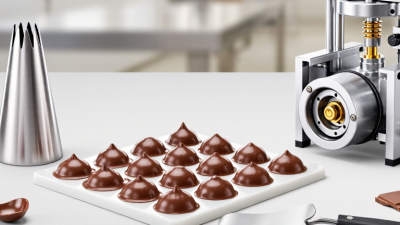
Choosing the right accessories can make a chocolate line easier to control, clean, and maintain. For global buyers, small details matter: a dosing nozzle that fits the depositor, a scraper suited to the drum, or a belt that carries warm pieces without marking them. Compatibility is not a minor check. It can affect production flow and replacement costs.
This guide covers 10 Best Chocolate Machine Accessories for Global Buyers, from tempering components to molds, pumps, and cleaning tools. The Italian phrase “Accessori macchine per il cioccolato” also reflects a broad category, not one universal specification. A useful reminder from Marco Bellini, an illustrative composite chocolate-equipment specialist, is: “Buy for the process you run, not the machine you hope to have.” It is not a sourced quotation from a real person; it expresses a practical selection principle. Check dimensions, product-contact materials, temperature range, and cleaning access with the equipment supplier. Ask about spare parts, too. Downtime is costly.
A polished catalog can hide a poor fit. A part may look right and still slow changeovers. That deserves a second look. The best choice depends on batch size, chocolate viscosity, shift patterns, and operator experience. This introduction cannot replace a technical review of a production line, and buyers should verify each item before ordering. The details are easy to overlook. The consequences are not.
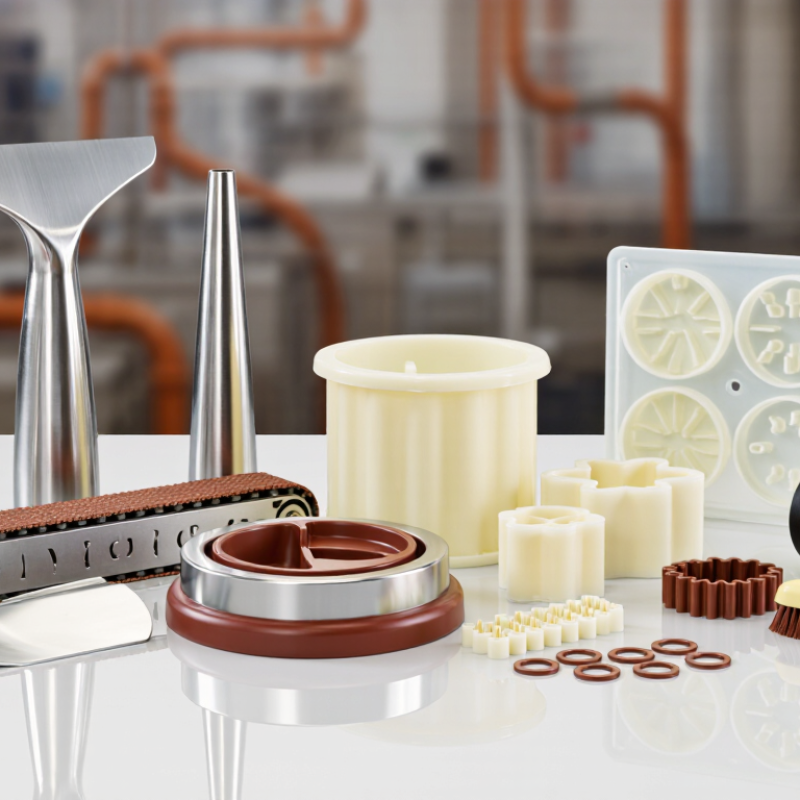
Chocolate machinery accessories shape how reliably a production line handles different products. A tempering machine may need a well-matched agitator and temperature probe to keep chocolate moving evenly. In an enrober, the pump, curtain plate, and wire mesh belt influence coating thickness and product transfer.
Small differences matter. A nozzle that is too wide can waste chocolate, while a poorly fitted scraper may leave residue on a roller.
Accessories also affect changeovers and cleaning. Removable hoppers, accessible seals, and appropriately designed contact surfaces can reduce the time needed to switch recipes or inspect equipment. Operators often notice problems through practical signs: uneven coatings, trapped chocolate around a joint, or a belt that drifts during a run. These clues can point to wear, incorrect adjustment, or a mismatch between the accessory and the machine.
Compatibility deserves careful attention. Check dimensions, operating temperatures, material specifications, and the machine’s working speed before selecting a replacement part. A technically suitable accessory may still disappoint if it is awkward to remove or difficult to clean.
That part is easy to overlook. Accessories do not fix every process issue; chocolate temperature, viscosity, and operator settings still matter. Sometimes the simplest component causes the most persistent delay.

Chocolate production accessories should match the task at each stage, not just the machine’s nameplate. During preparation, food-grade transfer hoses, pump seals, and jacketed-vessel fittings help move chocolate without cold spots or leaks. A temperature probe is a small part, but poor placement can produce misleading readings. Check its range, connection, and calibration procedure before ordering.
During forming, depositor nozzles control portion size, while molds shape bars, pralines, or filled pieces. Mold material, cavity dimensions, and release performance affect the finish. A vibrating table can help remove trapped air; too much vibration may shift fillings. Small details matter.
For coating and cooling, enrober belts, curtains, scrapers, and cooling-tunnel trays influence coverage and product spacing. Scrapers need to suit the belt surface, or they can cause wear. After production, dedicated brushes and removable parts make cleaning easier, while spare gaskets reduce downtime. Not every accessory is worth buying. Confirm dimensions, operating temperatures, food-contact documentation, and service requirements with the equipment supplier. For global shipments, request drawings and clear specifications; assumptions about thread sizes or electrical connections can be costly. Even careful planning misses something now and then.
For chocolate work, small accessories often determine whether a clean batch stays clean. A digital thermometer helps track tempering temperatures, while a stainless-steel scraper clears chocolate from bowls without leaving soft residue. Flexible spatulas reach corners; narrow offset spatulas spread coatings evenly across molded pieces. Polycarbonate molds release glossy bars when they are clean, dry, and gently tapped to remove bubbles. A dosing funnel or piston depositor controls portions, especially when filling cavities with thick ganache. Keep it warm, not hot.
During cooling and packing, flat trays support molds as they move, and wire racks let air circulate around dipped centers. Food-grade transfer sheets add cocoa-butter patterns and help finished pieces release cleanly. Lidded, food-contact-safe containers protect ingredients from moisture and odors; separate containers prevent crumbs or nuts from mixing with smooth chocolate. These tools sound ordinary. They are not always used well. A thermometer can read inaccurately if its probe touches a hot pan, so check it in ice water and record the result. Wash and dry accessories fully before storage; even a small drop of water can make melted chocolate seize. Cheap tools may work, but warped trays and scratched molds can create avoidable defects.
| No. | Accessory | Typical Processing Stage | Main Function | Key Selection Considerations | Cleaning and Food-Contact Notes |
|---|---|---|---|---|---|
| 1 | Interchangeable Depositor Nozzles | Depositing and molding | Direct liquid chocolate into molds or onto a production surface. Different outlet shapes can support different deposit patterns. | Check the nozzle connection, opening size, chocolate flow characteristics, and the required deposit shape. | Choose food-contact-compatible materials with smooth surfaces. Remove and clean nozzles according to the machine and sanitation instructions. |
| 2 | Chocolate Molds | Molding and solidification | Shape chocolate into bars, pieces, shells, or other molded products. | Confirm mold dimensions, cavity design, compatibility with the depositor, and suitability for the intended production process. | Use molds intended for food production. Follow the supplier’s cleaning and handling guidance to avoid scratches or residue. |
| 3 | Vibrating Table | After depositing into molds | Vibrates filled molds to help chocolate spread into cavities and release trapped air. | Check the working surface dimensions, vibration adjustment, load capacity, and compatibility with the mold format. | Keep the contact surface clean and inspect it regularly for damage or chocolate buildup. |
| 4 | Enrobing Wire Mesh Belt | Enrobing | Conveys centers through a chocolate curtain or coating area while allowing excess chocolate to drain. | Match belt width, mesh opening, construction, and operating speed to the enrober and product size. | Confirm that the belt is designed for food contact and can be cleaned effectively without leaving trapped product residue. |
| 5 | Enrobing Feed and Return Trays | Enrobing and chocolate recovery | Collect and guide chocolate beneath or around the enrobing area for controlled handling and return. | Check tray dimensions, connection points, drainage design, and fit with the enrobing line. | Choose smooth, corrosion-resistant food-contact surfaces and clean the trays between production runs as required. |
| 6 | Cooling Tunnel Trays or Product Guides | Cooling and transfer | Support or guide products as they move through a cooling tunnel, helping maintain orderly product spacing and transfer. | Verify tunnel width, product dimensions, guide position, and compatibility with the conveyor arrangement. | Use surfaces suitable for the operating environment and follow cleaning procedures that prevent moisture or residue buildup. |
| 7 | Heated Chocolate Transfer Hose | Transfer between equipment | Moves liquid chocolate between a melting or tempering unit and downstream equipment while helping maintain flow. | Check hose length, internal diameter, pressure and temperature ratings, connection type, and compatibility with the chocolate system. | Use a hose approved for the intended food-contact and temperature conditions. Clean and inspect it according to the equipment supplier’s instructions. |
| 8 | Food-Grade Pump and Pump Head | Chocolate transfer and feeding | Moves chocolate from a tank or tempering machine to a depositor, enrober, or other processing unit. | Select a pump type and flow range suited to the chocolate’s viscosity, temperature, required output, and system connections. | Ensure product-contact parts are suitable for food use and can be disassembled or cleaned using the specified procedure. |
| 9 | Tempering Machine Scraper or Agitator | Melting, mixing, and tempering | Moves chocolate within the working bowl and, where applicable, helps maintain contact with heated or cooled surfaces. | Confirm the part is designed for the specific machine model, bowl geometry, and chocolate processing conditions. | Inspect for wear, damage, or loose components. Clean and reinstall according to the equipment instructions. |
| 10 | Food-Contact Scrapers and Spatulas | Batch handling and equipment cleanout | Help transfer chocolate from containers or remove product from accessible surfaces during production and cleanout. | Choose a shape, size, and material suited to the container and task; avoid tools that can damage machine surfaces. | Use tools intended for food handling, keep them in good condition, and clean and store them hygienically. |
For global buyers, an accessory is compatible only when its dimensions, materials, and operating limits match the machine and recipe. Check connection sizes, voltage, temperature range, and food-contact documentation before comparing prices. A dosing nozzle that fits physically may still produce uneven deposits if its opening cannot handle the chocolate’s viscosity. Small details matter. Ask suppliers for drawings, tolerance ranges, and test results using a similar product.
Capacity should reflect real production, not a catalogue maximum. Compare throughput at your working temperature, batch size, and changeover frequency. Grand View Research estimated the global chocolate market at USD 119.39 billion in 2023 and projected 4.5% annual growth through 2030. This market estimate signals demand, but it does not specify accessory requirements. That distinction matters. For performance checks, record output per hour, temperature stability, cleaning time, and product loss during changeovers. Request a trial with your own chocolate, then inspect deposits for weight variation and streaking. I would not rely on a single demonstration: test repeated runs, since wear and operator handling can change results. Some comparisons remain imperfect, especially when suppliers use different test conditions. Insist on the conditions in writing.
Chocolate machine accessories, from dosing nozzles and scrapers to molds and temperature sensors, can affect product consistency and cleaning time. A polished specification is not enough. Ask for material declarations, batch traceability, cleaning instructions, and drawings showing how each part fits the machine. ISO 12100 provides principles for machinery risk assessment, while IEC 60204-1 addresses electrical equipment of machines. These standards do not replace destination-specific checks for food-contact materials. Small details matter.
Service and total cost deserve equal attention. Request written spare-part lead times, warranty terms, remote support hours, and the cost of routine replacements. A spare pump arriving six weeks late can idle a line, even when its purchase price looked attractive. McKinsey Global Institute’s 2020 report, “Risk, resilience, and rebalancing in global value chains,” found that 93% of surveyed supply-chain executives planned to increase resilience, and 44% planned to regionalize supply chains. For buyers, that supports checking local stock and alternate shipping options. Compare landed price, installation, consumables, maintenance, and downtime—not just the quote. The calculation is imperfect; operating conditions vary. Still, a clear cost sheet makes supplier comparisons more honest.
Utilizziamo i cookie per migliorare l'esperienza utente. Per maggiori informazioni, consulta la nostra Cookie Policy.