Top 5 Best Mine Ventilators for Efficient Airflow Solutions?
In the mining industry, effective ventilation is critical for safety and productivity. The use of high-quality Шахтный Вентилятор systems directly impacts air quality and worker health. According to a recent report from the Mining Safety and Health Administration, efficient mine ventilation can reduce airborne contaminants by up to 80%. This statistic underscores the importance of the right equipment for maintaining a safe work environment.
Expert John D. Miller, a leading authority in mine ventilation, emphasizes, “Proper airflow not only improves safety but boosts overall productivity.” His insights reflect the industry's growing focus on integrating advanced ventilation technologies. With various options available, selecting the best Шахтный Вентилятор requires careful consideration of specific mining conditions and airflow needs.
As we explore the top five ventilators, it’s essential to recognize the evolving challenges in this field. Ventilation systems must adapt to complex underground environments. While some models excel in airflow, they may fall short in energy efficiency. Balancing performance with sustainability poses questions for industry stakeholders. Thus, examining the best choices involves looking at both technological advancements and practical implications for everyday mining operations.
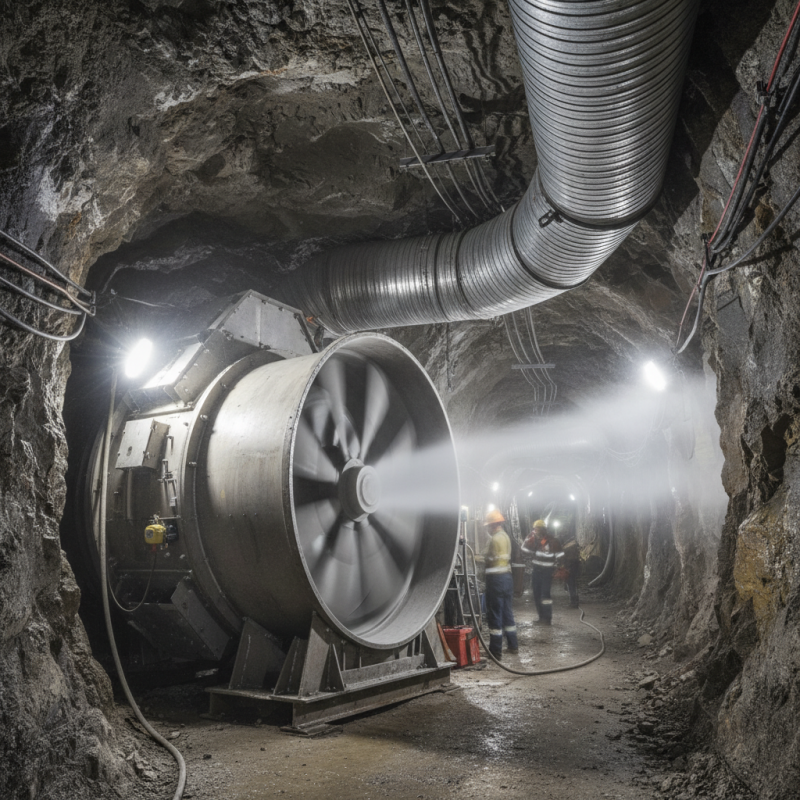
Understanding the Importance of Mine Ventilation for Safety and Efficiency
In underground mining, ventilation is crucial for worker safety. Proper airflow helps mitigate hazards such as toxic gases and excessive heat. A well-designed ventilation system ensures that fresh air reaches all working areas. This significantly reduces the risk of respiratory issues among miners.
Safety is not the only concern. Efficient ventilation affects productivity. If air quality is poor, workers may become fatigued and less effective. A reliable ventilation system keeps everyone alert and focused. It’s essential to regularly assess and maintain these systems. Small issues can grow into major problems if overlooked.
Ventilation also impacts equipment performance. Poor airflow can lead to overheating machinery. This not only affects operation but can also increase maintenance costs. Thus, understanding and prioritizing ventilation can have wide-ranging effects on a mining operation. Engaging with experts in this field can help ensure that systems are both safe and efficient.
Mine Ventilation Efficiency Comparison
Key Features to Consider When Choosing Mine Ventilators
When selecting mine ventilators, several key features should guide your decision-making process. First, airflow capacity is crucial. Efficient ventilation requires a system that can move large volumes of air. Data shows that mines can face airflows of over 40,000 cubic feet per minute. This is essential for maintaining safe and breathable conditions underground.
Durability is another vital factor. Mine ventilators often operate in harsh environments, including high humidity and dust. A study by the Mining Safety Institute indicates that poorly maintained equipment can lead to increased accident rates. This highlights the importance of choosing rugged models designed for longevity and reliability.
Additionally, energy efficiency cannot be overlooked. Research indicates that ventilation systems account for nearly 30% of a mine's total energy consumption. Selecting ventilators with efficient motors can lead to significant cost savings. However, finding a balance between energy efficiency and performance can be challenging. The effectiveness of a ventilator may decrease if energy-saving technologies are improperly implemented. A thorough assessment of both immediate needs and long-term impacts is key in achieving optimal airflow solutions.
Top Five Mine Ventilators: Performance, Durability, and Cost-Effectiveness
In the mining industry, effective ventilation is critical for safety and operational efficiency. Data from the Mine Safety and Health Administration (MSHA) suggests that improper ventilation can lead to hazardous situations. Therefore, choosing the right mine ventilator is vital. Mine ventilators must balance performance, durability, and cost-effectiveness to maximize airflow while minimizing operational costs.
When evaluating mine ventilators, it’s essential to look at airflow capacity and energy consumption. Reports indicate that models with high airflow efficiency can reduce energy costs by up to 30%. However, durability remains a concern, as many ventilators may fail under harsh conditions. Maintenance records show that frequent breakdowns can lead to significant downtime.
Regular inspections and upgrades can improve performance but often come at a hidden cost. Cost-effectiveness is another aspect that requires careful consideration. While upfront costs may be lower for certain ventilators, long-term operational costs can offset these savings. Industry studies reveal that investing in advanced ventilators may yield better ROI over time by enhancing air quality and reducing health risks. Yet, some mines stick with outdated models due to initial price hesitations, raising questions about their long-term strategy. Balancing these factors is a challenge faced by many operators in the field.
Comparison of Leading Brands in Mine Ventilation Technology
In the mining industry, effective ventilation is crucial for safety and operational efficiency. Recent studies have highlighted that up to 90% of mining accidents are linked to poor air quality. Ventilators play a pivotal role in maintaining breathable air and controlling temperature. An analysis by the Mining Safety and Health Administration reveals that innovative ventilation solutions can significantly reduce these risks.
Choosing the right ventilator involves scrutinizing specifications and technologies. Many brands offer diverse models, each designed for varying challenges. Industry experts stress the importance of creating a tailored ventilation strategy based on the unique conditions of each mine. This ensures optimal airflow and reduces energy costs. The integration of automated systems has shown to improve efficiency by up to 30%, indicating a shift toward smarter ventilation solutions.
Tip: Regular inspections of ventilation systems are essential. A well-maintained system can prevent costly downtimes. Another important consideration is the ongoing training of personnel in ventilator operation. Proper training can enhance the effectiveness of these systems and lead to a safer working environment. Don't overlook these aspects; even minor adjustments can yield considerable benefits in air quality and safety.
Future Trends in Mine Ventilation Solutions and Innovations
As the mining industry evolves, the need for effective ventilation solutions becomes crucial. Recent studies show that over 60% of mining accidents are linked to poor air quality. Innovations in mine ventilation systems aim to reduce these risks. Improved airflow not only enhances worker safety but also boosts productivity.
New technologies are emerging within the ventilation field. These include advanced fans that adapt to changing conditions. Sensors gather real-time data to optimize airflow. As a result, ventilation efficiency improves by 30% in some implementations. However, adoption remains slow. Many operators are cautious about transitioning from traditional methods.
Environmental regulations also drive change. There is increasing emphasis on sustainable practices. Future systems must incorporate renewable energy sources to power ventilation. This can potentially reduce operational costs by 20%. Yet, the challenge lies in balancing innovation with current infrastructure. Lack of investment in modern solutions hinders progress. Continuous research and development remain essential for the industry to thrive.