What Are the 7 Best Tips to Choose a Macchina di Cioccolato?
Choosing the right macchina di cioccolato can shape daily production, product quality, and long-term costs. A machine may look impressive in a showroom, yet perform poorly during a busy afternoon. Chocolate can thicken quickly. Small temperature changes may affect shine, texture, and molding results.
This guide explores seven practical tips for making a more informed choice. It considers capacity, temperature stability, tempering performance, cleaning effort, energy use, and operator safety. These details matter in bakeries, cafés, confectionery workshops, and small production rooms. A reliable machine should match your recipes, workspace, and expected output, not simply carry the highest price tag.
Real experience often reveals what product descriptions leave out. Stainless steel surfaces are easier to inspect and clean. Clear controls help new staff avoid costly temperature mistakes. A quiet motor can make long working sessions less tiring. After-sales support also matters when a sensor fails during a seasonal rush. Very few machines are perfect. I once underestimated cleaning time, and that affected production more than expected.
Professional specifications provide useful guidance, but they should not replace practical testing. Ask suppliers about heat recovery, viscosity handling, spare parts, and service response times. Request a demonstration with the chocolate you actually use. Compare performance after continuous operation, not only during a short display.
The best decision balances technical ability, workplace reality, and future growth. These seven tips can help buyers question attractive claims and recognize dependable value. Careful selection protects consistency, reduces avoidable waste, and supports better chocolate-making results over time.
Define Your Chocolate Production Needs and Desired Output
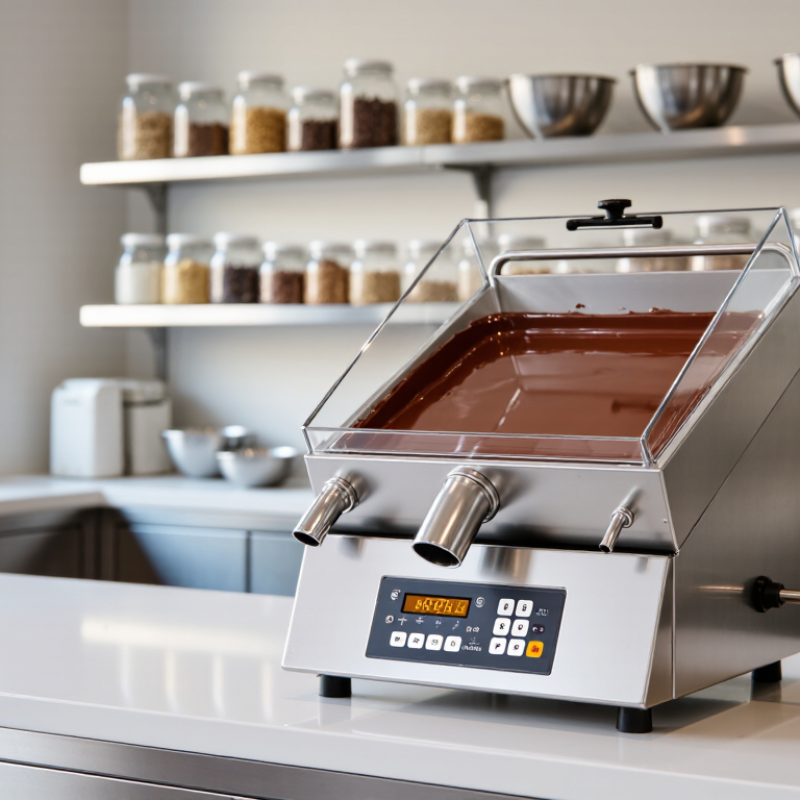
Choosing a macchina di cioccolato starts with a clear production target, not a shiny equipment specification. Estimate your daily demand, product types, and available working hours. A small confectionery making 80 kilograms weekly needs a different machine from a factory producing 800 kilograms daily. Write down realistic figures.
Measure your desired output in kilograms per hour. Then separate peak demand from normal demand. Chocolate bars, filled bonbons, and coated nuts may require different processing speeds and temperatures. Check whether the machine can melt, mix, temper, and deposit chocolate consistently. During production trials, I record batch time, temperature changes, cooling performance, and cleaning time. These details often reveal hidden capacity limits. A machine rated for 100 kilograms per hour may produce less when recipes include inclusions or thick fillings.
Think beyond the first year. Can your staff operate the controls accurately? Are recipes easy to adjust without creating waste? Ask for test runs using your actual chocolate and preferred batch size. Small differences in viscosity can affect pumps, molds, and coating thickness. Do not trust a brochure alone. It describes ideal conditions.
Real planning is imperfect. Demand can change suddenly, and early estimates may be wrong. Leave reasonable capacity for growth, but avoid paying for unused output. A practical choice balances production volume, product variety, labor skill, maintenance access, and energy use. Record your assumptions, review them monthly, and revise the equipment plan when sales patterns prove you mistaken.
What Are the 7 Best Tips to Choose a Macchina di Cioccolato? - Define Your Chocolate Production Needs and Desired Output
| Tip |
Selection Dimension |
Practical Data or Target |
Why It Matters |
| 1 |
Match the machine to your required output |
Estimate average production first. Small test or artisan operations commonly plan around 5–25 kg/h, while continuous production may require 50 kg/h or more. Choose capacity based on actual demand rather than the maximum advertised rate. |
A machine that is too small creates bottlenecks; an oversized machine can increase purchase, energy, cleaning, and maintenance costs. |
| 2 |
Define batch size and working volume |
For batch production, compare the minimum and maximum usable volume, such as 5–10 kg for small batches or 20–100 kg for larger production. Confirm whether the stated capacity refers to the tank’s total volume or its recommended working volume. |
Working volume affects mixing efficiency, heat transfer, product consistency, and the amount of chocolate left in the tank. |
| 3 |
Select the correct chocolate compatibility |
Verify compatibility with dark, milk, white, ruby-style, compound, or couverture chocolate. Couverture chocolate contains cocoa butter and normally requires controlled tempering; compound coatings generally use non-cocoa-butter fats and may follow different processing requirements. |
Viscosity, fat composition, and solid content influence pumping, agitation, melting, tempering, and deposit accuracy. |
| 4 |
Check tempering temperature control |
Typical final working temperatures are approximately 31–32°C for dark chocolate, 29–30°C for milk chocolate, and 28–29°C for white chocolate. The exact settings depend on the recipe, cocoa butter, and processing method. |
Accurate heating, cooling, and agitation help produce a stable crystal structure, glossy appearance, clean snap, and better resistance to blooming. |
| 5 |
Evaluate heating, cooling, and agitation systems |
Look for independently controlled heating and cooling, stable temperature sensing, and continuous or programmable agitation. A practical control resolution of about 0.1°C is useful for tempering, although actual accuracy should be confirmed in the technical specification. |
Poor temperature uniformity or inadequate mixing can cause partially tempered chocolate, uneven viscosity, and inconsistent product quality. |
| 6 |
Confirm utilities and installation requirements |
Check voltage and phase, rated power, available floor space, ventilation, drainage, and compressed-air or water requirements. Many compact machines use single-phase power, while larger systems may require three-phase electrical service; always verify the local specification. |
A machine may meet production targets but remain unusable if the facility lacks the correct electrical supply, clearance, drainage, or service access. |
| 7 |
Prioritize hygiene, maintenance, and future expansion |
Prefer food-contact parts made from stainless steel, accessible product paths, removable components, clear cleaning procedures, and readily available wear parts. Allow approximately 20–30% spare capacity if demand is expected to grow. |
Simple cleaning reduces allergen and flavor cross-contact risks, while serviceability and spare capacity support reliable long-term production. |
Note: The capacity and temperature figures are general planning ranges. Final machine settings and output should be validated with the specific chocolate recipe, equipment configuration, and production conditions.
Compare Machine Types, Capacity, and Temperature Control
What Are the 7 Best Tips to Choose a Macchina di Cioccolato?
Choosing a macchina di cioccolato starts with the product, not the price. Tip 1: Compare machine types. Melters suit small batches, while tempering machines improve crystal stability. Enrobers fit coated products, but they need more floor space. Tip 2: Check the heating method. Water-jacketed systems offer gentle, even heating. Direct heating may respond faster, yet it can create hot spots. I would not assume faster is better.
Tip 3: Match capacity to real production. A 10-kilogram batch machine may suit a pastry kitchen, while continuous systems support industrial lines. Leave headroom for seasonal demand. The 2024 PMMI State of the Industry report highlights labor pressure and stronger interest in automation. However, automation cannot repair poor workflow. Tip 4: Measure loading, cleaning, and transfer time, not only hourly output. Tip 5: Study temperature control closely. Chocolate commonly requires precise melting, cooling, and working ranges, often within a few degrees Celsius. Independent probes and automatic alarms reduce operator mistakes. Small errors become visible as streaks, dull surfaces, or unstable snap.
Tip 6: Ask for documented test results using your recipe. Viscosity changes with cocoa butter, inclusions, and particle size. Tip 7: Compare sanitation design and service access. Removable contact parts, smooth welds, and clear manuals save practical hours. The International Cocoa Organization’s 2023/24 market reporting shows the supply chain remains sensitive to cocoa availability and price changes. Efficient heat control can limit waste, but it will not solve every cost problem. I would request a live trial before signing. Temperature claims can look excellent on paper.
What Are the 7 Best Tips to Choose a Chocolate Machine?
Compare machine types, working capacity, and temperature control before making a purchase.
The figures show representative planning values for commonly used machine categories, not brand-specific specifications. Actual performance depends on chocolate formulation, ambient conditions, batch size, and operating method.
1. Match the machine type: Melters suit basic melting, while tempering machines provide controlled crystallization.
2. Check working capacity: Compare usable batch size or hourly throughput with your real production volume.
3. Prioritize temperature control: Stable control around the working temperature helps improve shine, snap, and contraction.
4. Review heating and cooling: Tempering requires both heating and controlled cooling, not heating alone.
5. Consider product viscosity: Thick chocolate, inclusions, and compound coatings may require stronger agitation or pumps.
6. Evaluate cleaning: Removable bowls, accessible contact surfaces, and simple drainage reduce maintenance time.
7. Leave room for growth: Select enough capacity for expected demand without creating excessive chocolate waste.
Evaluate Materials, Cleaning Requirements, and Food Safety
Choosing a macchina di cioccolato starts with materials that tolerate heat, moisture, and repeated washing. Food-contact stainless steel is usually a dependable choice. It should resist rust and avoid hidden surface damage. Inspect welds, corners, paddles, and the heating bowl carefully. Rough seams can trap chocolate residue and microorganisms. Silicone gaskets should remain flexible without strong odors. Ask for food-contact documentation and clear temperature limits before purchasing.
Cleaning design matters as much as heating performance. Removable parts make daily sanitation easier, especially around the scraper and drain outlet. Avoid machines with narrow gaps that require special brushes. A smooth, accessible interior saves time between batches. Check whether components can handle approved cleaning agents and safe water temperatures. Follow local food-safety requirements, even when the manual seems vague. A built-in thermometer helps, but verify it with a calibrated thermometer during routine checks. Keep simple cleaning records for dates, detergents, and inspections.
I once underestimated a small seal because it looked clean. It later held a thin chocolate film. That mistake changed my inspection routine. Do not trust appearance alone. Smell, touch, and examine difficult areas under bright light. Also consider electrical protection, stable drainage, and ventilation near the machine. The cheapest design may become expensive through labor, repairs, and inconsistent hygiene. A thoughtful choice protects flavor, staff time, and customer safety.
Check Energy Efficiency, Ease of Use, and Available Features
What Are the 7 Best Tips to Choose a Macchina di Cioccolato?
Choosing a macchina di cioccolato starts with its energy use. Check wattage, heating method, and standby consumption before comparing prices. An insulated tank can maintain stable heat with less power. Look for adjustable temperature control for dark, milk, and white chocolate. Accurate control protects texture and reduces wasted batches. My practical mistake was choosing speed over insulation. The machine warmed quickly, but electricity costs were higher than expected.
Ease of use matters during busy preparation. Select a clear display, simple controls, and a tap that does not drip. Removable parts should be easy to wash without special tools. Check the manual for cleaning times and maintenance requirements. A heavy bowl may improve stability, but it can make daily handling tiring. Test the working height if possible. Small details matter.
Review the available features carefully. A timer, melt-and-hold mode, overheat protection, and temperature memory can improve consistency. Capacity should match real production, not an imagined peak day. Extra programs sound useful, yet unused settings may confuse new operators. Ask whether replacement parts and technical support are available. Read independent user feedback, not only sales claims. Reliability depends on service, safe materials, and repeatable results. Leave room for doubt. Even a well-designed machine may need practice.
Assess Supplier Support, Warranty Coverage, and Total Cost
What Are the 7 Best Tips to Choose a Macchina di Cioccolato?
Choosing a macchina di cioccolato requires more than comparing heating power.
Tip 1:
Ask for a written support agreement. It should state response times, remote diagnosis, and on-site service.
Tip 2:
Check technician availability in your region. A perfect machine is useless during a production stoppage.
Tip 3:
Request training for operators, cleaning, calibration, and troubleshooting. Ask for training records, not promises.
Tip 4:
Examine spare-parts availability and delivery times. Critical sensors and pumps should have realistic replacement schedules.
Tip 5:
Read the warranty line by line. Confirm coverage for labor, travel, electrical parts, temperature controls, and installation defects. Wear parts may be excluded. That matters.
Tip 6:
Compare warranty length with expected operating hours. A short warranty can hide future repair exposure.
Tip 7:
Calculate total cost of ownership, including energy, sanitation, preventive maintenance, software updates, installation, and downtime.
The U.S. Department of Energy’s Operations & Maintenance Best Practices guide states that operations and maintenance can represent 60–70% of life-cycle costs in some systems. The equipment price is only the visible portion.
Deloitte’s 2024 Smart Manufacturing Survey links stronger operational systems with measurable gains in capacity and productivity, but automation alone cannot replace supplier competence. In my own costing, I underestimated cleaning labor and emergency freight. That mistake changed the final purchase decision. Request a three-year cost model, reference customers with similar output, and written warranty exclusions before signing. Numbers still need questioning.