Who Are China’s Top Chocolate Tempering Machine Suppliers?
Choosing among China’s top chocolate tempering machine suppliers takes more than comparing prices or polished product photos. A temperatrice di cioccolato must hold chocolate within a narrow working range while keeping its texture smooth and its flow steady. On a production floor, small details matter: control response, scraper design, cleaning access, and how easily operators can repeat a batch. A reliable supplier should explain these details clearly.
Peter P. Greweling, a chocolate instructor and author, has taught widely on chocolate work. A practical paraphrase of his approach is: “Tempering means guiding cocoa butter crystals through controlled heating and cooling.” That principle offers a useful lens for comparing machines. Ask suppliers how they manage temperature stability, mixing, capacity, and recipe changes. Request specifications, service terms, and a demonstration using the chocolate you actually plan to process. A brochure alone is not enough.
This guide examines Chinese suppliers through practical questions, not unsupported rankings. It considers machine range, manufacturing information, customization, export support, and access to spare parts. Details matter. Supplier claims should be checked against documentation and, where possible, a factory or live-machine review. No single model suits every workshop. A small artisan line may need flexible batch control, while a larger plant may prioritize continuous output and service coverage. The goal is a well-supported decision, not a quick shortlist.
What Chocolate Tempering Machines Do and How They Work
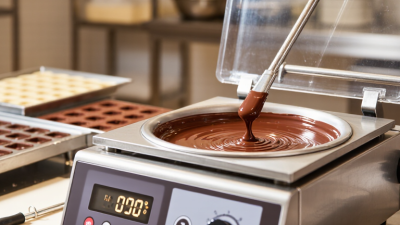
A chocolate tempering machine manages heat and agitation to form stable cocoa-butter crystals. These crystals help chocolate set with a glossy surface, a clean snap, and less risk of gray bloom. The machine typically melts chocolate, cools it, then gently reheats it to a working temperature. Dark chocolate often works near 31–32°C, but recipes and equipment differ. Small shifts matter. The International Cocoa Organization’s February 2025 Quarterly Bulletin reported roughly 4.8 million tonnes of global cocoa grindings in 2023/24. That figure shows the scale of cocoa processing, not the number of tempering machines in use.
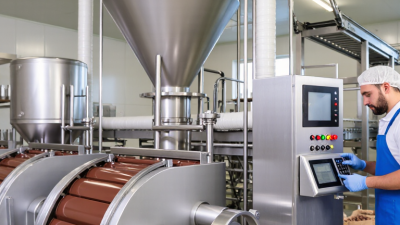
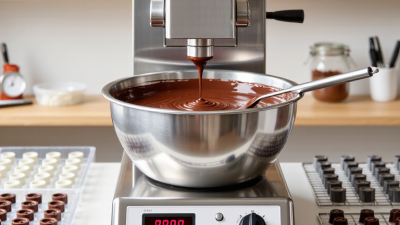
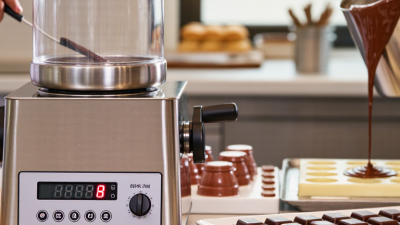
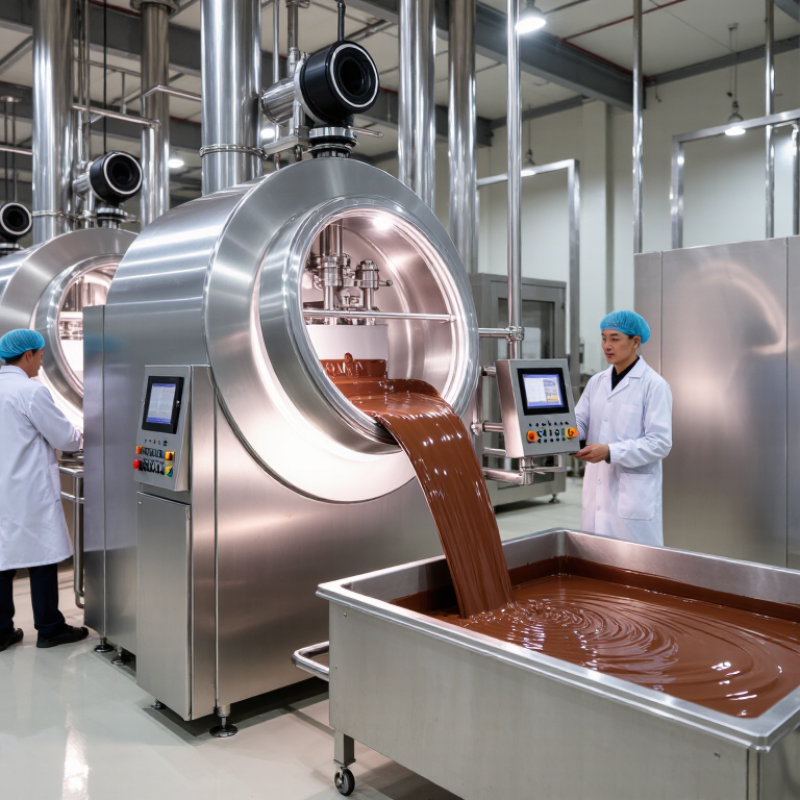
Inside a continuous tempering unit, scraped surfaces move chocolate through cooling zones while mixers keep the mass even. A small tabletop machine uses the same principle on a smaller scale. Operators check temperature with a probe and test a sample on a cool surface; a properly tempered sample should firm evenly and look smooth. Feed temperature, room conditions, and cocoa-butter content can all affect results. Not magic. If chocolate thickens or streaks, the cause may be poor crystal formation, but it may also be a rushed temperature check. Manufacturer setpoints are useful starting points, not universal recipes.
Overview of China’s Chocolate Tempering Machine Industry
China’s chocolate tempering machine industry is supported by a large food-processing base and demand for consistent chocolate quality. Grand View Research valued the global chocolate market at USD 119.39 billion in 2023 and forecast a 7.0% annual growth rate from 2024 to 2030. This signals broader demand, not direct machine sales in China. The National Bureau of Statistics of China reported roughly RMB 2.1 trillion in 2023 operating revenue for food manufacturing enterprises above designated size.
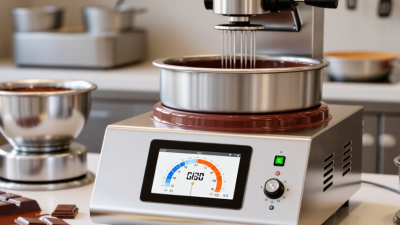
For equipment makers, practical performance matters more than headline capacity. A tempering machine must control temperature steadily, circulate chocolate evenly, and recover quickly after a batch change. Operators notice small swings: a glossy coating can turn streaky, while poorly managed cooling can create unwanted crystal forms. Cleanability and dependable parts also affect daily production. That sounds simple. It isn’t.
China’s supplier landscape includes manufacturers serving small workshops as well as larger confectionery lines. Buyers should compare working capacity, temperature accuracy, mixing method, and service response under real production conditions. Published specifications do not always show performance with different chocolate recipes. That is a limitation worth admitting: supplier claims need practical verification, ideally through a product trial and clear acceptance criteria.
Profiles of Leading Chinese Chocolate Tempering Machine Suppliers
Chinese chocolate tempering machine suppliers vary in scale and specialization. Some focus on compact tabletop units for bakeries and teaching kitchens. Others build continuous tempering lines for larger confectionery workshops. Their equipment may include heated tanks, agitators, cooling sections, and digital temperature controls. Details matter.
A capable supplier should explain how its machine handles chocolate viscosity, batch size, and production speed. Ask for operating videos or a live trial using your intended chocolate. Check whether temperature readings remain stable during loading and dispensing. A clear maintenance plan is useful, too. Scrapers, pumps, and seals need regular attention, and small design differences can affect cleaning time.
Supplier profiles also differ in engineering depth and export support. Some provide custom hoppers or conveyor connections, while others offer standard models with shorter lead times. Request specifications, power requirements, warranty terms, and spare-parts availability in writing. Compare test results, not just brochure claims. One limitation: public product information can be incomplete, so independent verification is wise. A lower purchase price may still mean slower technical support or harder-to-source components.
How Chinese Suppliers Differ in Technology and Production Capacity
Chinese chocolate tempering machine suppliers differ less by appearance than by how they control temperature and handle production changes. Some build compact batch machines for small runs; others offer continuous tempering lines linked to cooling tunnels. A useful comparison includes heating zones, cooling control, agitator design, and sensor placement. Small details matter. A stable display reading does not guarantee evenly tempered chocolate across a full tank.
Production capacity also varies widely. A supplier may quote kilograms per hour, but that figure depends on chocolate type, recipe, and operating conditions. Ask for test data using a similar product, not just a catalogue rating. Observe how quickly the machine recovers after adding fresh chocolate. Watch the flow at the outlet. Does it stay smooth, or fluctuate during a longer run? These checks reveal more than a headline capacity figure.
Factory capability matters too. A supplier with in-house fabrication and assembly may respond faster to custom hopper sizes or line layouts, but this should be verified during a technical review. Request wiring diagrams, maintenance intervals, and details on food-contact surfaces. If possible, inspect a trial run and record temperatures at several points. I would not rely on one successful batch alone. Repeated tests are more convincing.
Key Factors for Evaluating and Selecting a Supplier
Selecting a chocolate tempering machine supplier starts with process fit, not a polished brochure. Check your batch size, chocolate types, output needs, heating method, and floor space. Ask for tempering ranges and control accuracy, then request a demonstration using a recipe close to yours. A stable flow should produce glossy shells, a clean snap, and consistent viscosity across repeated runs. Small variations matter.
Service is part of the equipment. Confirm installation support, operator training, spare-part availability, response times, and warranty exclusions in writing. Ask how calibration and maintenance are handled, and whether machine surfaces can be cleaned without awkward disassembly. Review references from confectionery operations with similar production volumes. A low purchase price may hide costly downtime; still, the highest quote does not guarantee better support. Compare energy use, changeover time, reject rates, and routine wear costs. If answers stay vague, pause. A trial may not represent every seasonal recipe, so keep that uncertainty in your notes.
Tips: Bring your own chocolate for a trial. Record temperatures, output, and cleaning time. Ask who responds when production stops.