FBM Boscolo

What Is a Chocolate Ball Mill and How Does It Work?

What is a chocolate ball mill, and why does it matter in modern chocolate production? A chocolate ball mill, or “mulino a sfere per cioccolato,” reduces sugar and cocoa particles through controlled impact and friction. Inside its stainless-steel chamber, hardened balls move through a warm chocolate mixture. Their movement breaks down coarse particles and creates a smoother mouthfeel.

Industry data explains the growing interest. Grand View Research valued the global chocolate market at more than USD 120 billion in 2023, while Mordor Intelligence forecasts continued growth through this decade. These reports do not measure ball-mill sales directly. However, they show why manufacturers need faster, repeatable refining systems. Bühler and Royal Duyvis Wiener technical materials commonly describe particle sizes near 18–25 microns for smooth chocolate, depending on the recipe and sensory target.

Dr. Ewald Notter, a recognized chocolate educator and author, emphasizes a practical truth: “Particle size is a major part of chocolate texture.” The ball mill supports that target by combining refining, mixing, and heat control in one process. Operators monitor viscosity, temperature, residence time, and particle distribution. A small temperature rise can change flow dramatically. A slightly coarse particle may remain noticeable on the tongue.

The machine is efficient, but it is not magic. Poor dosing, unstable cocoa butter, or weak cleaning routines can reduce quality. This introduction will examine the mill’s internal parts, working sequence, benefits, limits, and operating choices. Some published figures differ between suppliers, so careful testing still matters.

What Is a Chocolate Ball Mill and How Does It Work?

What Is a Chocolate Ball Mill?

A chocolate ball mill is a compact refining machine used to improve chocolate texture. It contains a horizontal chamber filled with food-grade grinding balls. These balls may be made from hardened steel or ceramic materials, depending on the equipment design and product requirements.

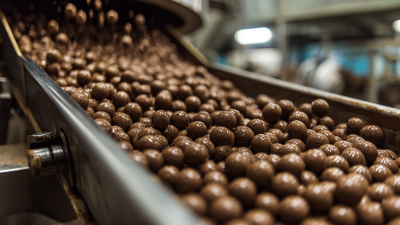
During operation, chocolate liquor, sugar, cocoa solids, and other ingredients enter the chamber. A rotating shaft moves the mixture through the ball charge. The balls collide with, press against, and shear larger particles. This action reduces particle size and disperses solid ingredients more evenly. Chocolate leaves the mill with a smoother mouthfeel and more consistent flow.

Temperature control is essential. Excessive heat can damage flavor, change viscosity, or encourage unwanted fat separation. Operators usually monitor product temperature, motor load, residence time, and particle size. A practical target often depends on the recipe, because dark, milk, and filled chocolate behave differently. Cleaning also requires care. Small chocolate residues can remain around seals and outlet areas. That detail is easy to miss.

A ball mill does not automatically create perfect chocolate. It refines particles, but it cannot repair poor ingredients or an unbalanced formula. In real production, results may vary between batches. Wear on grinding media can also influence performance over time. For reliable operation, technicians should check ball condition, cooling efficiency, and final texture regularly. The machine is powerful, but not foolproof.
What Are the Main Parts of a Chocolate Ball Mill?

A chocolate ball mill is a compact refining system built around several essential parts. The product enters through a feed hopper, where controlled dosing prevents sudden loading. A jacketed grinding chamber then holds chocolate and hardened balls. The rotating agitator transfers energy into the mixture, reducing sugar and cocoa particles into a smoother suspension.

The agitator shaft, bearings, and drive motor determine how consistently the mill operates. Scraper elements keep chocolate moving away from cooler wall areas. Temperature sensors monitor the jacket and product zone. This matters because chocolate can thicken quickly when its temperature falls only a few degrees. The International Cocoa Organization’s 2023/24 Annual Report estimated global cocoa grindings at about 4.855 million tonnes. That scale increases pressure on reliable thermal control and continuous processing.

A discharge valve controls the refined chocolate leaving the chamber. Some systems also include a recirculation line, allowing operators to repeat milling when particle size remains too high. Pumps, seals, and food-grade piping complete the product path. Every contact surface should be cleanable and resistant to chocolate fats. The U.S. Department of Energy notes that motor-driven systems represent a major share of industrial electricity use, so drive efficiency deserves attention. A larger motor is not automatically better. In practice, seal wear, uneven ball loading, and inaccurate temperature readings can reduce quality before operators notice. That is an uncomfortable design lesson.

How Does a Chocolate Ball Mill Process Chocolate?

A chocolate ball mill turns a coarse chocolate mixture into a smoother, more uniform mass. The process usually begins after mixing cocoa liquor, sugar, milk powder, and cocoa butter. The pre-mixed chocolate enters a sealed grinding chamber filled with hardened steel balls. A rotating shaft moves the balls rapidly. Their impact and rubbing action reduce sugar and cocoa particles.

Particle size matters. Many professional chocolate systems target approximately 20–25 micrometres for a smooth mouthfeel. The chocolate may pass through the chamber several times.

A jacket controls heat, often keeping the product near 45–55°C, depending on its recipe. Excessive heat can damage flavor and affect viscosity. Too little heat can make the mass thick and difficult to circulate.

The International Cocoa Organization’s 2023/24 report estimated global cocoa production at roughly 4.8 million tonnes. This scale makes stable grinding important for consistent industrial output. A 2024 global chocolate market report also valued the sector above 130 billion U.S. dollars, showing why process control receives close attention.

Yet a ball mill does not solve every quality problem. It cannot fully correct poor ingredient dispersion or weak tempering later. Operators still check particle size, temperature, flow, and sensory texture during production.

The process is not perfectly linear. Small recipe changes can require slower circulation, longer residence time, or another pass. Some practical adjustments remain based on experience, not only laboratory data.

Which Factors Affect Its Grinding Performance?

What Is a Chocolate Ball Mill and How Does It Work?

A chocolate ball mill uses rotating grinding media to refine cocoa, sugar, and other ingredients. Inside the chamber, hardened balls collide with the chocolate mass. This action reduces particles and improves mouthfeel. A pump moves the product through the grinding zone at a controlled rate.

Grinding performance depends heavily on particle size entering the mill. Coarse sugar or cocoa particles require more energy and longer residence time. The filling ratio also matters. Too few balls reduce contact, while excessive filling restricts movement. Ball size affects the result as well. Smaller balls provide more contact points for fine refining, but they may slow the process. Mill speed must stay within a practical range. Excessive speed can create heat without improving refinement.

Temperature is critical. Chocolate that becomes too warm may lose stable viscosity and develop flavor problems. Cooling water should remove heat consistently, not only after overheating occurs. Moisture also changes flow behavior, especially in recipes with hygroscopic ingredients. Fat content affects lubrication and particle movement. A thicker formula may need slower feeding or adjusted energy input. Operators should measure particle size, outlet temperature, viscosity, and power consumption during trials. Small changes can produce surprising results. I would not trust one successful batch as proof of an ideal setting. Wear on the grinding media can also alter performance over time, so inspection records and repeat testing remain essential.

What Is a Chocolate Ball Mill and How Does It Work? - Which Factors Affect Its Grinding Performance?

Performance Dimension Typical Operating Range or Condition How It Affects Grinding Practical Control Measure
Primary function Wet grinding and refining of chocolate ingredients Reduces particle size and improves the smoothness and consistency of the chocolate mass. Maintain a stable feed, suitable residence time, and adequate circulation through the grinding chamber.
Grinding principle Impact, compression, and shear between rotating balls and the chocolate mass Repeated contact between grinding media and particles breaks down sugar, cocoa solids, and other solid ingredients. Use the correct ball size distribution and avoid operating conditions that cause excessive slip or ball packing.
Target particle size Approximately 15–30 micrometres for a smooth chocolate texture Particles above this range may feel gritty, while excessively fine grinding can increase energy use and affect viscosity. Verify particle size with a suitable laboratory method and define an acceptable product specification.
Grinding media filling Often about 70–85% of the effective chamber volume Too little media reduces contact frequency; too much media restricts product movement and raises mechanical load. Follow the equipment design limits and inspect the media level during scheduled maintenance.
Ball material Food-contact-compatible, wear-resistant material The material influences wear rate, contamination risk, durability, and cleaning requirements. Use approved food-processing materials and monitor for cracks, surface damage, or abnormal wear.
Ball size distribution A mixture of smaller and larger balls selected for the product and mill design Larger balls provide stronger impact, while smaller balls increase the number of fine particle contacts. Balance impact and fine grinding rather than using a single ball size for every formulation.
Mill speed Typically adjusted below the critical speed of the mill Higher speed can increase impact and shear, but excessive speed may cause centrifugal attachment, overheating, and inefficient motion. Optimize speed through trials while monitoring product temperature, motor load, and particle size.
Chocolate viscosity Usually controlled within the formulation-specific processing window High viscosity limits circulation and reduces media movement; very low viscosity can reduce grinding intensity and increase separation. Adjust temperature, cocoa butter, or permitted emulsifier levels according to the validated recipe.
Product temperature Commonly maintained around 40–60°C, depending on recipe and process stage Temperature changes cocoa butter viscosity and flowability; excessive heat can affect flavor, color, and product quality. Use jacket cooling or heating and monitor the mass continuously at the mill outlet.
Feed rate Set according to chamber volume, mill power, viscosity, and target residence time An excessive feed rate shortens grinding time and may produce coarse particles; a low rate can increase residence time and heat buildup. Use a controlled pump or feeder and correlate flow rate with particle-size results.
Residence time Determined by chamber volume, recirculation rate, and production throughput Longer residence time generally allows more size reduction but may increase energy consumption and thermal exposure. Use staged passes or recirculation when one pass cannot achieve the required fineness.
Moisture content Kept low and controlled according to the recipe and ingredient specifications Excess moisture can cause sugar agglomeration, higher viscosity, unstable flow, and reduced grinding efficiency. Store ingredients correctly and prevent water ingress during processing and cleaning.
Energy consumption Varies with motor rating, throughput, viscosity, media load, and required fineness Higher energy input may improve grinding up to an optimum, after which heat and operating cost increase faster than product benefit. Track specific energy per kilogram together with particle size and outlet temperature.
Process monitoring indicators Particle size, viscosity, temperature, motor current, throughput, and media condition A combined view helps identify whether poor fineness is caused by formulation, operating conditions, wear, or insufficient grinding time. Record key parameters by batch and compare them with validated operating limits.

Note: Operating values are general industry ranges. Actual settings should be validated for the specific formulation, mill configuration, food-safety requirements, and desired product quality.

How Is a Chocolate Ball Mill Used and Maintained?

A chocolate ball mill refines cocoa, sugar, and milk solids through rotating grinding media. Its job is simple in theory. Consistency is harder. The ICCO 2023/24 forecast places global cocoa grindings near 4.86 million tonnes, increasing pressure on reliable processing equipment. In practice, operators feed the mill gradually and control temperature, viscosity, and residence time. Excessive heat can damage aroma and thicken the chocolate. A stable product usually needs careful adjustment, not maximum speed.

During production, check the outlet texture, motor load, and product temperature at regular intervals. Record these readings. Small changes often reveal worn media, blocked screens, or poor ingredient flow. The particle size target should be confirmed with suitable testing equipment, rather than judged only by touch. That shortcut sometimes works. It also fails quietly. After production, drain remaining chocolate while it is still workable, then follow the approved cleaning procedure. Inspect seals, bearings, shafts, grinding media, and internal surfaces for cracks or unusual wear. The PMMI 2023 State of the Industry report highlights the growing importance of preventive maintenance and equipment uptime in food processing; a missed inspection can become expensive downtime.

Tips: Keep a maintenance log with dates, temperatures, vibration observations, and replaced parts. Do not overfill the chamber. Verify the mill’s calibration after maintenance. If chocolate becomes gritty, do not immediately increase speed. Check feed balance, media condition, and temperature first. Clean-looking equipment may still hide worn seals or contaminated product paths. Safety guards must remain fitted, and only trained personnel should open the machine.