FBM Boscolo

How to Choose a Chocolate Machine for Your Business

Choosing a chocolate machine is not just a matter of comparing prices or production speeds. The right choice depends on what you make, how much you produce, and how consistently your team can operate and clean the equipment. A small workshop making molded pralines has different needs from a business coating biscuits or producing chocolate bars. A machine that looks impressive in a brochure may still be awkward beside your worktable.

Start with the product and the process. Consider whether you need tempering, molding, enrobing, or several functions in one unit. Check the machine’s working capacity against realistic batch sizes, not an optimistic sales estimate. Temperature control, accessible cleaning points, available floor space, and local technical support matter in daily use. Ask suppliers for a demonstration using your ingredients, and observe how the chocolate flows, sets, and releases from the mold. Small details count. A difficult-to-remove panel can add time to every cleanup.

The phrase macchina di cioccolato may appear in supplier searches, but the label alone tells you little about performance. Request clear specifications, warranty terms, spare-parts information, and training details. If possible, speak with businesses that make products similar to yours. Their experience may reveal trade-offs a specification sheet misses. It is easy to overestimate future demand; I would test your expected workflow against a typical busy day before investing. No machine removes the need for skilled handling. The best choice is the one your team can use safely, maintain reliably, and grow with—without paying for features that sit idle.
How to Choose a Chocolate Machine for Your Business

Assess Your Business’s Chocolate Production Needs

Before comparing chocolate machines, measure what your business actually makes. Record kilograms per shift, batch size, daily peak demand, and the number of recipes you run. A shop making small seasonal batches needs different equipment from a producer supplying several retailers. Count the steps, too: melting, tempering, molding, enrobing, cooling, and cleaning. That workflow matters.

The International Cocoa Organization’s Quarterly Bulletin of Cocoa Statistics estimated 2023/24 global cocoa grindings at about 4.8 million tonnes, roughly 4% below the previous season. This shows a large, changing market, but it cannot tell you which machine capacity to buy. Your own production records are more useful. Track busy weeks, product changeovers, rejected batches, and time spent waiting for cooled molds. Then ask suppliers for demonstrated output using your recipe, not just a headline hourly rate. Check available floor space, power, ventilation, cleaning access, and operator training. Small details add up. A machine that meets today’s target may struggle during holiday peaks; one sized for an optimistic forecast may sit idle. I would leave room for growth, but not pay for capacity without a realistic production plan.

How to Choose a Chocolate Machine for Your Business

Assess Your Business’s Chocolate Production Needs

Estimate the machine’s hourly output from your daily target and available production time. These planning examples assume 8 productive hours per day; recommended capacity includes a 20% buffer for changeovers and workflow variation. Adjust the figures to match your actual schedule and process.

Compare the Main Types of Chocolate Machines

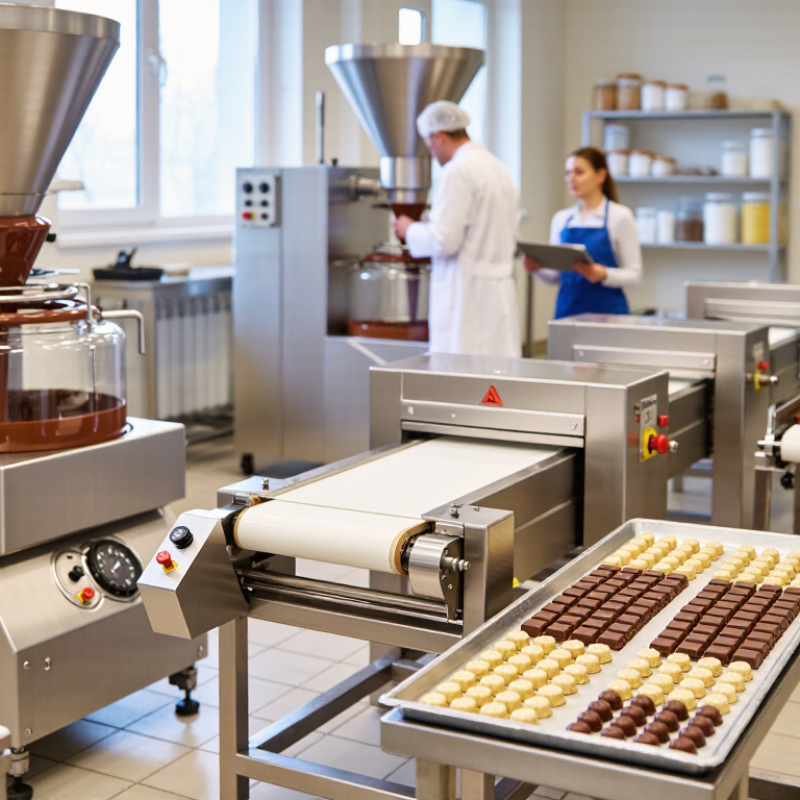
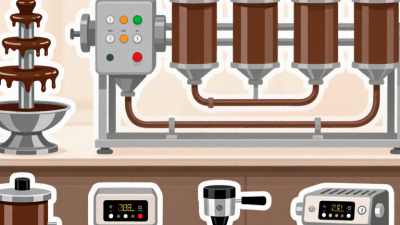
Chocolate machines serve different stages, so compare them by the product you plan to make. A small batch melanger grinds and mixes ingredients, with a compact footprint suited to trial runs and artisan batches. It offers flexibility, but processing can take time. Refiner-conche systems suit larger, repeatable production; they need more floor space and careful process control. Scale matters.

Tempering machines control chocolate’s crystal structure, helping finished pieces set with a clean snap and glossy surface. They are essential for molded bars and coated products, but tempering alone does not shape or coat them. Enrobers spread a curtain of chocolate over centers such as biscuits or fruit. Molding lines fill cavities and can produce consistent shapes at higher volumes. Choose based on the workpiece, not the machine’s impressive output claims.

Market conditions also affect sizing. The International Cocoa Organization’s Quarterly Bulletin of Cocoa Statistics estimated 2023/24 global grindings at 4.818 million tonnes, signaling a large but shifting processing sector. That figure is context, not a forecast for your shop. Estimate peak demand, cleaning time, changeovers, and operator skill before comparing throughput. A perfect forecast is unlikely. I would leave room for growth, but avoid buying capacity that sits idle.

Match Machine Capacity and Features to Your Production Goals

Match machine capacity to saleable output, not its advertised maximum. The International Cocoa Organization’s Quarterly Bulletin of Cocoa Statistics estimated global cocoa grindings at about 4.8 million tonnes in 2023/24. That figure shows the scale of the wider market, but it cannot size your line: your product mix, shifts, and seasonal peaks matter more. Calculate required kilograms per hour from realistic run time, then allow for cleaning, changeovers, and brief stoppages.

For molded bars, compare tempering capacity with mold volume and cooling-tunnel residence time. For enrobed pieces, check belt width, line speed, and whether the cooling tunnel can handle the planned flow. Ask suppliers to demonstrate your actual recipe and target weight; a machine’s rated throughput may not reflect chocolate viscosity or frequent SKU changes. A small buffer helps, though too much capacity can leave expensive equipment idle. This choice is less tidy than a spec sheet makes it seem.

Tips: Bring a weekly production schedule and sample molds to equipment trials. Record usable output after changeovers, not just peak speed. Recheck the estimate against your busiest month.

How to Choose a Chocolate Machine for Your Business — Match Machine Capacity and Features to Your Production Goals

Production Goal Suitable Machine Setup Typical Working Capacity Indicative Throughput Useful Features Planning Considerations
Product development, demonstrations, or occasional small batches Compact batch tempering machine Approximately 5–15 kg in the bowl, depending on the model About 10–30 kg per hour when operating continuously; actual output depends on batch size and handling time Precise temperature control, removable bowl, easy cleaning, and simple manual or semi-automatic operation Choose a machine that can temper the smallest batch you expect to make. A large bowl may be inefficient for frequent small runs.
Regular production for a small shop or local bakery Floor-standing batch tempering machine, optionally paired with a small enrober or moulding equipment Approximately 15–50 kg per batch Roughly 20–80 kg per hour, depending on the tempering cycle, product, and downstream equipment Programmable tempering cycles, continuous agitation, heated delivery, and compatibility with depositing or enrobing accessories Check the capacity of the entire process. A temperer with higher output will not increase production if moulding, cooling, or packaging is slower.
Growing production with multiple products or longer daily runs Continuous tempering machine with an enrober, moulding line, or depositor Typically a hopper holding about 20–100 kg, depending on configuration Commonly around 50–300 kg per hour for the tempering unit; the complete line may produce less Continuous temperature monitoring, adjustable flow, recipe settings, variable-speed controls, and integrated cooling options Allow for changeovers, cleaning, product variation, and planned downtime when calculating usable daily output.
High-volume manufacturing with dedicated production lines Industrial continuous tempering and processing line Hopper and buffer capacity are configured for the line; storage may range from tens to several hundred kilograms Approximately 300–1,000+ kg per hour for some industrial tempering systems; line output depends on the full production configuration Automated dosing, process monitoring, integration with cooling tunnels, conveyors, and production controls Assess floor space, electrical and cooling requirements, cleaning procedures, operator training, and service support before purchase.
Making chocolate from cocoa nibs or cocoa mass in-house Separate refining and conching equipment, followed by a suitable tempering machine Batch sizes vary widely; small commercial refiners may process several kilograms to tens of kilograms per batch Not directly comparable with tempering throughput; refining and conching may take many hours per batch Controlled particle-size reduction, agitation, temperature management, and a process suited to the desired chocolate texture Refining, conching, and tempering are different operations. Confirm that the proposed equipment performs the process your recipe requires.

Note: Figures are indicative ranges, not guaranteed specifications. Capacity and throughput vary by chocolate type, recipe, operating temperature, batch size, equipment design, and production workflow. Compare supplier-rated output under conditions similar to your own, and size the complete production line around its slowest step.

Check Safety, Materials, Energy Use, and Maintenance Requirements

How to Choose a Chocolate Machine for Your Business

A suitable chocolate machine should fit your daily production, not just its advertised capacity. Check that guards cover moving parts and that emergency stops are easy to reach. Hot surfaces need clear warnings and safe access for cleaning. Ask for operating and maintenance instructions, and have a qualified technician review installation requirements. Small details matter.

Look closely at every surface that may touch chocolate, including seals, pipes, and hopper interiors. Food-contact materials should be documented, smooth, corrosion-resistant, and practical to clean. Check that parts can be removed without awkward tools or excessive force. Energy figures deserve the same scrutiny: ask how much power the machine uses while heating, holding temperature, and running a typical batch. Peak-output claims alone can mislead. Compare figures under similar working conditions.

Maintenance can shape the real cost of ownership. Find out how often belts, seals, filters, and other wear parts need inspection or replacement, and whether the instructions are specific. Ask about spare-part availability and routine service needs before purchasing. If possible, watch an operator clean the machine after production; a showroom demonstration may not reveal every inconvenience. I would leave room for uncertainty, too: actual energy use and cleaning time can vary with recipes, batch size, and staff habits. A simple maintenance log can help your team spot changes early.

Evaluate Suppliers, Total Costs, and After-Sales Support

Choosing a chocolate machine is not just a capacity decision; supplier quality changes its real value. Ask vendors for written specifications covering hourly output, tempering range, batch size, power draw, and cleaning steps. A demonstration matters. Watch a full cycle, including startup and washdown, rather than a polished sample pour. Request contact details for customers with similar products and production volumes. Their feedback can reveal whether quoted output holds up during a busy shift.

Compare total cost over a realistic ownership period, not just the purchase price. Add freight, installation, electrical work, ventilation, operator training, routine maintenance, and likely spare parts. Check what is excluded, especially travel charges and consumables. Estimate downtime too: a low-cost machine can become expensive if a sensor or pump takes days to arrive. Ask suppliers to provide service response times in writing and confirm local technician coverage. Numbers should be comparable. They often aren’t.

After-sales support deserves the same scrutiny as the machine. Clarify warranty duration, parts availability, remote troubleshooting hours, and who pays for return shipping. Ask for manuals, cleaning instructions, and training materials before signing; vague promises are hard to use during a fault. If possible, test how support handles a simple question before purchase. This is easy to underestimate, even with a spreadsheet. A supplier may respond quickly during sales, yet more slowly after delivery, so record commitments and keep a short list of critical spares. Leave room in the budget for learning, because real production rarely follows the brochure perfectly.