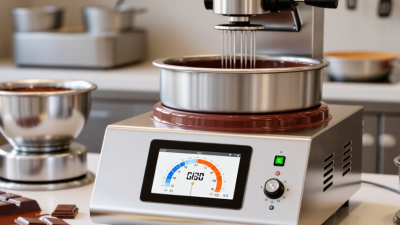
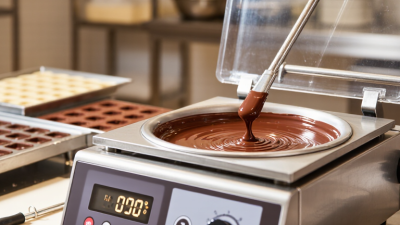
Choosing an industrial chocolate tempering machine requires more than comparing prices, heating power, or production speed. The right equipment must match your chocolate type, batch size, workflow, and quality targets. A small artisan line needs different control from a factory producing thousands of molded pieces daily. This guide examines practical factors that affect daily performance, including tempering accuracy, cooling design, pump consistency, cleaning access, and operator safety.
A reliable tempering machine should maintain stable chocolate temperatures during loading, processing, and transfer. Even a slight fluctuation can create dull surfaces, gray streaks, weak snaps, or poor contraction in molds. Look for precise sensors, adjustable temperature zones, and controls that operators can understand quickly. The term temperatrice cioccolato industriale may appear in international supplier searches, but the machine’s real value depends on documented performance and suitable construction. Stainless steel contact parts, hygienic welds, and accessible components can reduce maintenance problems.
Do not trust specifications alone. A higher capacity rating may not suit thick couverture or frequent flavor changes. Ask suppliers for test results, product references, warranty terms, spare-part availability, and cleaning instructions. If possible, test your own chocolate before purchase. That step often reveals pumping issues, uneven tempering, or inconvenient access points. Experience matters here, but it is not infallible. Operators can overlook energy use, noise, or future production changes. A careful selection process balances technical evidence with hands-on trials, helping buyers choose equipment that remains dependable beyond the first production run.
Industrial tempering controls cocoa butter crystals, creating a glossy surface, clean snap, and stable texture. The requirements depend on production volume, chocolate type, cooling conditions, and operator skill. Dark, milk, and white chocolate do not share identical tempering curves. A suitable machine should provide accurate heating, cooling, agitation, and temperature recovery after loading. These details matter during continuous production.
The International Cocoa Organization reported approximately 4.46 million tonnes of cocoa production in 2023/24, while global grindings remained higher than supply. This pressure makes process efficiency increasingly important. A machine should therefore limit chocolate loss during start-up, product changes, and cleaning. The 2024 PMMI Packaging Compass also identifies automation, traceability, and labor reduction as major food-manufacturing priorities. Look for programmable recipes, clear temperature displays, hygienic contact surfaces, and records that support quality checks. Small details help.
In practical testing, I would measure temperature stability at the outlet, not only on the control screen. Ask for data at different flow rates. A system may perform well at full capacity but struggle during short runs. That weakness is easy to miss. I would also check cleaning time, pump accessibility, and the accuracy of thermal sensors. A perfect specification sheet does not guarantee consistent chocolate. Operator training, room temperature, and formulation still influence the result. Even experienced teams can choose excessive capacity, creating avoidable energy use and longer changeovers.
When selecting an industrial chocolate tempering machine, start with your real production volume, not an optimistic target. Record kilograms processed per hour across normal and peak shifts. A machine rated far above demand may waste energy and floor space. An undersized unit can create queues, unstable temperatures, and rushed operators. I have seen production plans fail because seasonal orders were treated as daily averages. Measure the busiest two-hour window instead.
Chocolate type changes the required machine design. Dark chocolate often needs different tempering curves from milk or white chocolate. Viscosity, cocoa butter content, inclusions, and working temperature all affect throughput. A line handling couverture may need stronger agitation and precise cooling control. Chocolate with nuts or crisp pieces can require wider passages and easier cleaning access. Ask for documented temperature stability under your actual recipe. Brochure capacity alone is not enough.
Leave practical headroom, usually around 15 to 25 percent, for recipe changes and maintenance interruptions. However, excessive capacity can reduce control when the batch is small. Check minimum working volume, pump performance, heating zones, and cleaning time before purchase. Test a representative batch if possible. The first calculation is rarely perfect. Recheck it against shift patterns, staff skills, and future products. A smaller machine may be wiser for flexible production, while a larger model suits steady, high-volume output.
Choosing an industrial chocolate tempering machine starts with the tempering method. Batch systems suit varied recipes and moderate volumes. Continuous systems provide steadier output during long production runs. Seed tempering can produce consistent crystal formation, but seed quality matters. I have seen operators blame the machine when poorly stored chocolate caused dull surfaces and weak snap. The method must match your product range, hourly capacity, and changeover schedule.
Temperature control deserves close attention. Dark, milk, and white chocolate require different working temperatures, often within narrow ranges. A reliable machine should offer accurate sensors, stable heating, controlled cooling, and separate temperature zones. Ask how often sensors need calibration. Check the response time after adding fresh chocolate. A two-degree fluctuation can affect viscosity, gloss, and mould release. Small details matter. The stated temperature is not always the real chocolate temperature, especially near tank walls or pump lines.
Automation should reduce variation, not hide it. Look for recipe storage, adjustable speed, automatic temperature correction, alarm history, and clear operator controls. Data logging helps verify each production batch and identify drift before defects spread. During trials, measure chocolate at the outlet, not only on the display. Test snap, shine, and contraction after cooling. I would also examine cleaning access and recovery after stoppages. Full automation sounds attractive, yet poorly configured settings can repeat the same mistake faster. Leave room for manual checks and trained judgment.
Construction affects hygiene more than appearance. Choose food-contact stainless steel, radiused corners, sealed welds, and minimal crevices. Removable pumps and tools simplify daily cleaning. EHEDG hygienic-design guidance emphasizes cleanable surfaces, drainage, and protection from product contamination. Codex Alimentarius Commission’s General Principles of Food Hygiene, updated in 2022, also supports documented sanitation and hazard-control procedures. Ask to inspect welds, seals, and internal pipe connections. Shiny is not enough.
Energy claims need careful comparison. According to the U.S. Department of Energy’s 2021 Motor Systems Market Assessment, motor-driven equipment consumes about 68% of U.S. industrial electricity. A tempering machine’s pump, heater, cooling system, and standby mode all matter. Compare measured kilowatt-hours per production cycle, not only installed power. Request data at your target chocolate volume and ambient temperature. Small differences become expensive.
Maintenance should be visible and practical. Select accessible heaters, replaceable seals, standard sensors, and clear fault diagnostics. A 2023 PMMI food-processing report highlights the value of reducing unplanned downtime through preventive maintenance and operator training. Keep cleaning records, temperature checks, and parts-replacement dates. Operators should remove chocolate buildup before it hardens around valves. I would not trust a perfect brochure. Ask for service intervals, spare-part lead times, and real cleaning demonstrations. A machine may meet hygiene expectations yet still be frustrating to maintain.
How to Choose an Industrial Chocolate Tempering Machine?
Supplier support should be tested before purchase, not after a production stoppage. Ask for commissioning hours, operator training, spare-parts lead times, and remote troubleshooting procedures. Request references from facilities using similar chocolate volumes and recipes. A useful supplier should explain temperature stability, cleaning access, and sensor calibration in practical terms. Promises are not enough.
Safety documentation must match the machine delivered. Check risk assessments against ISO 12100 and control-system safeguards against ISO 13849-1. Confirm emergency stops, guarding, thermal protection, electrical isolation, and food-contact materials. The World Health Organization estimates that contaminated food causes 600 million illnesses annually, so sanitation design deserves more than a checkbox. Small gaps matter.
Purchase price can hide the real expense. Compare energy consumption, heating-up time, cooling demand, compressed-air use, cleaning labor, maintenance intervals, and expected downtime. The International Energy Agency reports that motor-driven systems consume more than 40% of global electricity, making efficient pumps and drives commercially important. Calculate cost per operating hour over five years. My less comfortable observation is this: many evaluations still trust catalogue capacity more than measured performance. Insist on factory acceptance testing, utility readings, and a written total-cost model. A cheaper machine may be expensive.
| Evaluation Dimension | Data Point to Verify | Practical Benchmark or Requirement | Why It Matters | Evidence to Request from the Supplier |
|---|---|---|---|---|
| Production Capacity | Continuous output | Choose a rated output that is approximately 20–30% above the planned peak requirement. Typical industrial ranges are 50–500 kg/h, depending on the application. | Extra capacity helps absorb seasonal demand, recipe changes, and short production interruptions without immediately requiring a second machine. | Factory acceptance-test report, documented output under the target chocolate recipe, and the stated operating conditions. |
| Temperature Control | Chocolate temperature stability | Target stable control within approximately ±0.5°C at the outlet, subject to chocolate type, room temperature, and sensor location. | Stable temperature supports consistent cocoa-butter crystallization, gloss, contraction, and snap. | Temperature mapping results, sensor calibration records, and a demonstration using dark, milk, or white chocolate as required. |
| Product Compatibility | Chocolate and inclusion handling | Confirm compatibility with dark, milk, and white chocolate, as well as the required viscosity range and any inclusions such as nuts or crisped ingredients. | Different recipes require different melting temperatures, agitation conditions, pump designs, and cleaning procedures. | Written compatibility matrix, recommended operating temperatures, pump specifications, and test samples from the customer’s recipes. |
| Heating and Cooling | Utility demand | Record connected electrical load, phase, voltage, compressed-air demand, cooling-water demand, and heat-rejection requirements before purchase. | Utilities can affect installation cost, line capacity, production-room temperature, and long-term energy consumption. | Technical datasheet, utility-consumption figures at rated output, connection diagram, and site-preparation requirements. |
| Hygienic Design | Food-contact construction | Food-contact parts should be made from corrosion-resistant materials such as stainless steel, with smooth, drainable, accessible surfaces and minimal product traps. | Hygienic construction reduces contamination risk, cleaning time, chocolate waste, and maintenance difficulty. | Material certificates, food-contact declarations where applicable, weld-finish details, hygienic design drawings, and cleaning instructions. |
| Safety Compliance | Machinery risk assessment | The machine should be designed and documented using machinery risk-reduction principles such as ISO 12100, with guarding, interlocks, emergency stops, and residual-risk information. | A documented risk assessment helps identify crushing, entanglement, hot-surface, electrical, and unexpected-start hazards. | Risk assessment, safety circuit description, declaration of conformity or equivalent documentation, and user instructions. |
| Electrical Safety | Control-panel and machine wiring | Verify that electrical equipment and control systems are designed according to the regulations applicable in the installation country; IEC 60204-1 is a common reference for machinery electrical equipment. | Correct electrical design reduces shock, fire, control-system, and commissioning risks. | Electrical schematic, short-circuit rating, protective-device list, panel inspection record, and applicable conformity documentation. |
| Operator Protection | Emergency and thermal safeguards | Check accessible emergency-stop devices, guarded moving parts, over-temperature protection, low-level protection, alarm functions, and safe restart behavior after power loss. | These safeguards protect operators and help prevent equipment damage or uncontrolled chocolate heating. | Functional safety test procedure, alarm list, emergency-stop test results, and maintenance lockout instructions. |
| Supplier Support | Installation and commissioning | Prefer suppliers offering documented installation, commissioning, recipe setup, operator training, and performance verification at the customer’s site or remotely. | Professional commissioning can shorten ramp-up time and reduce early production waste. | Scope of supply, commissioning checklist, training agenda, acceptance criteria, and travel or service-charge schedule. |
| Supplier Support | Response and spare-parts availability | Set a written target for technical response, such as one business day for urgent production issues, and confirm availability of critical parts for at least 5–10 years. | Downtime costs can exceed the original price difference between two machines, especially on continuous production lines. | Service-level agreement, support hours, escalation process, spare-parts list, lead times, and recommended spare-parts inventory. |
| Maintenance | Preventive-maintenance workload | Compare scheduled tasks such as pump inspection, seal replacement, sensor calibration, filter cleaning, lubrication, and electrical checks. | A machine with a lower purchase price may cost more if it requires frequent specialist maintenance or difficult disassembly. | Maintenance schedule, estimated labor hours per service, consumables list, service manuals, and access requirements. |
| Cleaning and Changeover | Cleaning time and chocolate loss | Measure the time required for a normal cleaning and recipe changeover. Record drained product, rinse material, labor time, and restart time. | Frequent changeovers can make cleaning labor and product residue a significant operating cost. | Validated cleaning procedure, changeover video or test report, drainable-volume data, and measured product-retention quantity. |
| Energy Cost | Annual electricity estimate | Example: 18 kW average demand × 2,000 operating hours/year × $0.15/kWh = $5,400/year. | Actual energy use depends on load factor, ambient temperature, standby time, heating method, cooling method, and electricity tariff. | Measured average power at representative production load, standby power, and the supplier’s test conditions. |
| Labor Cost | Operator and cleaning labor | Example: 0.5 additional labor hours per operating day × 250 days/year × $22/hour = $2,750/year. | Automation, easy access, and shorter cleaning procedures can provide more savings than a small reduction in the purchase price. | Time study for loading, monitoring, cleaning, changeover, and routine inspection. |
| Downtime Exposure | Cost of unplanned stoppage | Example: 4 hours of downtime × $650/hour contribution margin = $2,600 per incident. | Reliability, remote diagnostics, critical spares, and service response should be evaluated against the potential production loss. | Reliability data, fault history where available, remote-diagnostic capabilities, and guaranteed service response terms. |
| Total Operating Cost | Illustrative annual operating cost |
Electricity: $5,400 Direct labor: $2,750 Preventive maintenance and consumables: $2,000 Estimated annual total: $10,150 |
Use the same production volume, operating hours, labor rate, energy tariff, and maintenance assumptions when comparing suppliers. | Five-year total-cost-of-ownership model including purchase price, installation, utilities, labor, maintenance, spare parts, training, and expected downtime. |
| Warranty | Coverage and exclusions | Compare warranty duration, covered components, response obligations, travel costs, labor coverage, and exclusions for wear parts and incorrect cleaning. | A longer warranty is not valuable if critical components, service labor, or transport are excluded. | Complete warranty terms, claim process, excluded-parts list, and documented warranty start date. |
| Scalability | Future production expansion | Verify whether the design permits additional depositing lines, larger hoppers, recipe storage, remote monitoring, or integration with upstream and downstream equipment. | Expandable controls and interfaces can delay or reduce the cost of future line upgrades. | Interface list, communication protocols, available options, layout envelope, and upgrade pricing. |
| Cost comparison formula: Five-year total cost of ownership = purchase price + installation + training + energy + labor + maintenance + consumables + spare parts + cleaning materials + expected downtime − documented residual value. The numerical examples above are calculation benchmarks and should be replaced with verified supplier data, local utility rates, labor rates, operating hours, and production requirements. | ||||
Utilizziamo i cookie per migliorare l'esperienza utente. Per maggiori informazioni, consulta la nostra Cookie Policy.