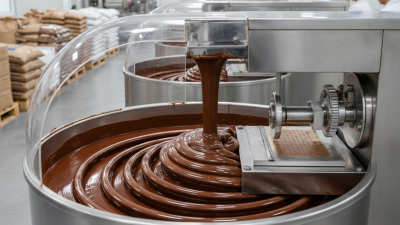
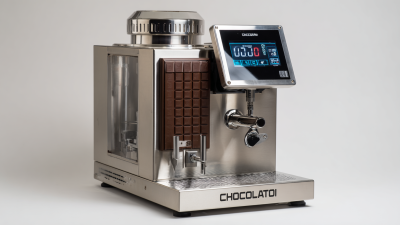
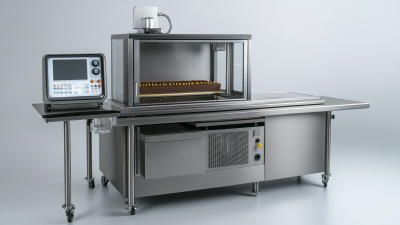
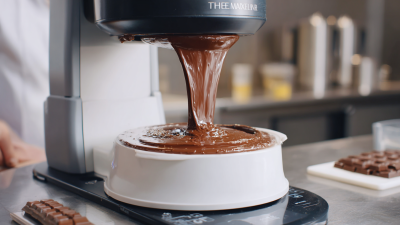
Choosing a temperatrice di cioccolato in 2026 requires more than comparing prices and heating capacity. The right machine should match your recipes, production volume, workspace, and staff experience. A small pastry studio may need a compact tabletop model with precise temperature control. A chocolate factory may require continuous tempering, automated dosing, and easier cleaning.
Jean-Pierre Wybauw, a respected chocolate educator, said, “Chocolate is a very sensitive product.” That warning remains practical. A machine can display 31°C, yet poor agitation may still produce dull surfaces, streaks, or weak snaps. Real performance depends on stable heat, consistent movement, sensor accuracy, and correct cooling. Ask suppliers for measurable tolerances, not only attractive photographs.
Look closely at the details. Can the bowl be removed without tools? Does the machine clean quickly after dark chocolate? Can it handle milk and white chocolate without lengthy adjustments? Check service availability, warranty terms, electrical requirements, and replacement parts. These points often matter more than a polished touchscreen.
Experience should guide the final decision. Test chocolate in your own production conditions, including busy periods and smaller batches. A model that works beautifully during a demonstration may struggle beside a warm oven. This is where judgment becomes imperfect. No machine removes the need for tempering knowledge, careful loading, and regular maintenance. The best temperatrice di cioccolato supports skilled work; it does not replace it.
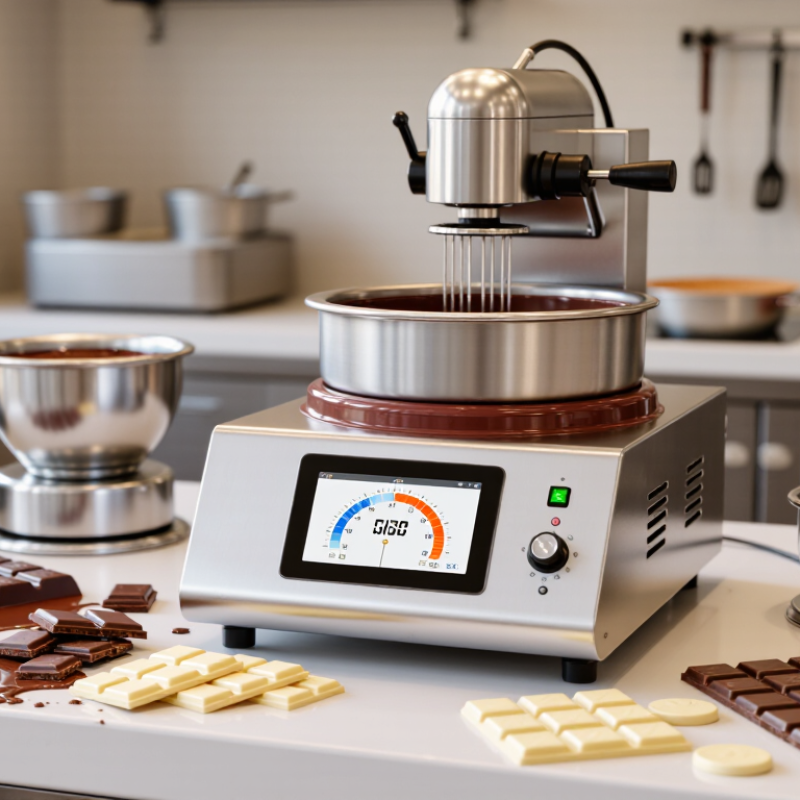
How to Choose a Temperatrice di Cioccolato in 2026?
Choosing a temperatrice starts with the chocolate type, not the machine’s appearance. Dark chocolate usually needs a working temperature of 31–32°C. Milk chocolate performs best around 29–30°C. White chocolate generally requires 28–29°C. These narrow ranges support a stable cocoa butter crystal structure, helping create a glossy finish and clean snap.
In practical testing, use a calibrated probe thermometer beside the machine’s display. Displays can drift, especially after long production sessions. I once trusted a screen reading and produced chocolate with dull streaks. That mistake showed me the value of checking texture, shine, and contraction from the mold. A suitable machine should allow precise temperature adjustments, gentle agitation, and steady heat recovery. It should also handle your normal batch size without leaving chocolate sitting too long.
Tips: Preheat the bowl before adding chocolate. Keep water away from the working area. Stir slowly and scrape the corners. Test a small smear on parchment; it should set evenly within several minutes. Room temperature matters too. A warm kitchen can make 31–32°C dark chocolate feel softer than expected. My settings are not always perfect on the first attempt, so I record each batch and adjust carefully. The thermometer may be accurate, but the chocolate still has the final opinion.
| Chocolate Type | Melting Temperature | Cooling Temperature | Working Temperature | Recommended Machine Range | Typical Applications |
|---|---|---|---|---|---|
| Dark Chocolate | 45–50°C | 27–28°C | 31–32°C | 28–50°C | Bars, molded chocolates, pralines, ganaches, and enrobing |
| Milk Chocolate | 40–45°C | 26–27°C | 29–30°C | 27–45°C | Filled chocolates, bars, coatings, and decorative work |
| White Chocolate | 38–43°C | 25–26°C | 28–29°C | 26–43°C | Light-colored shells, decorations, bars, and delicate coatings |
| Ruby or Colored Couverture | Approximately 40–45°C | Approximately 26–27°C | Approximately 28–30°C | 26–45°C | Specialty molded pieces and decorative couverture; always follow the product specification |
| Selection Criterion | Recommended Specification | Why It Matters | Practical Check |
|---|---|---|---|
| Chocolate Compatibility | Adjustable settings covering at least 26–50°C | Different chocolate types require different melting, cooling, and working temperatures | Confirm that the controller allows fine temperature adjustments in 0.1–0.5°C increments |
| Batch Capacity | 1–3 kg for small production; 5–15 kg for continuous professional work | A suitable bowl size reduces waste and helps maintain a stable working temperature | Choose a working load that matches the normal daily batch rather than the maximum capacity |
| Temperature Control | Digital control with a calibrated food-safe probe | Small temperature errors can affect gloss, contraction, snap, and resistance to blooming | Compare the displayed temperature with an independent probe during setup |
| Agitation System | Gentle, continuous stirring with adjustable speed where possible | Uniform movement helps distribute stable cocoa-butter crystals and reduces hot or cool zones | Check that the agitator reaches the corners and does not introduce excessive air |
| Heating Method | Even indirect heating, such as a controlled water bath or thermally regulated bowl | Gradual, even heating lowers the risk of scorching or locally overheating the chocolate | Look for uniform temperature distribution and protection against dry overheating |
| Cleaning and Hygiene | Removable food-contact parts made from stainless steel or approved food-safe materials | Chocolate residue can harden in seams and affect flavor, hygiene, and future batches | Check whether the bowl, scraper, and agitator can be removed without special tools |
| Production Workflow | Basic tempering for occasional use or continuous tempering for regular output | Continuous systems reduce manual stirring and help maintain a steady flow for enrobing | Select based on molds, shell production, dipping, or enrobing requirements |
| Energy and Space | Stable electrical supply, compact footprint, and insulated components | Efficient temperature retention can reduce recovery time and operating costs | Measure available counter space and verify the machine's voltage and power requirements |
How to Choose a Temperatrice di Cioccolato in 2026?
A tempering machine should match your daily production, not an impressive brochure number. The International Cocoa Organization’s 2024/25 report estimates global cocoa grindings at about 4.85 million tonnes. That scale shows demand, but it does not define your factory. Your hourly requirement does.
Record your actual output for five working days. Include start-up losses, cleaning, mould changes, and short pauses. If your line needs 120 kg daily across six hours, a 25 kg/h temperatrice may be adequate. A 40 kg/h model could offer useful recovery capacity, but it may waste energy during low-volume runs. Bigger is not always better.
Batch size matters when production changes throughout the day. A 10 kg batch suits frequent flavour or mould changes. A 50 kg batch reduces repeated loading, yet it can leave chocolate waiting in the hopper. The PMMI 2024 report on confectionery processing trends highlights flexibility and efficient changeovers as continuing equipment priorities. Measure your smallest practical batch, too. Many buyers forget it.
Check temperature stability at the outlet, not only nominal kg/h. Ask for performance data using your chocolate’s viscosity and cocoa butter content. Lab figures can disappoint on a warm production floor. I would also allow 15–20% spare capacity, though this is a cautious estimate rather than a rule. Track real throughput after installation, then revise your planning assumptions.
Temperature stability should be your first technical checkpoint. A temperatrice that holds ±0.5°C supports more reliable Form V crystal formation. This matters when chocolate moves through cooling, reheating, and working zones. Even a small fluctuation can produce dull surfaces, soft breaks, or gray fat bloom.
I have seen a glossy batch lose its snap after one unstable cooling cycle. The equipment looked efficient, but the thermometer told another story.
Ask suppliers for logged temperature data, not only display specifications. Test the machine with dark, milk, and white chocolate because each recipe responds differently. Dark chocolate commonly works near 31–32°C, while milk and white chocolate need lower working temperatures.
The control system should recover quickly after new chocolate enters the bowl. Check the probe location, heating response, cooling response, and calibration interval. A stable reading is useful only when the sensor measures the real chocolate mass.
Scale also deserves attention.
The International Cocoa Organization reported global cocoa grindings of roughly 4.8 million tonnes in its 2023/24 market reporting. That volume reflects a competitive sector where repeatable processing reduces waste and rework. Yet production speed can hide poor crystallization.
Ask for a short trial using your actual recipe and batch size. Record temperature every minute. Review the curve afterward.
Reports and brochures help, but they cannot replace evidence from your kitchen or production room. Mistakes still happen. That is why accessible controls, cleaning points, and simple maintenance records matter as much as heating power.
How to Choose a Temperatrice di Cioccolato in 2026?
A reliable temperatrice di cioccolato should pass a documented CE audit before performance claims receive attention. Check the declaration of conformity, risk assessment, electrical drawings, and emergency-stop function. CE marking is not a quality award. It confirms applicable European requirements were addressed. Ask which rules apply to the exact machine configuration.
Food safety needs equal weight. The equipment should fit your HACCP plan, especially around heating, cooling, cleaning, and allergen control. ISO 22000 certification can show that the manufacturer manages food-safety risks systematically. However, certification alone can mislead. Review its scope, expiry date, issuing body, and covered production site. A certificate for another factory is not enough.
Inspect every surface touching chocolate. Request material declarations for stainless steel, seals, coatings, hoses, and scrapers. In the European market, confirm compliance with applicable food-contact rules, including Framework Regulation (EC) No 1935/2004 and good manufacturing practice requirements. Ask for migration-test results when materials or temperatures create concern. Do not rely on “food grade” as a complete answer.
Look closely.
During a factory audit, open access panels and inspect dead corners. Chocolate residue can harden behind poorly designed guards. Cleaning instructions should state water limits, detergent compatibility, drying time, and inspection points. I would also test temperature stability with a calibrated probe, not only trust the display. Small verification gaps can become expensive lessons.
How to Choose a Temperatrice di Cioccolato in 2026?
When comparing a temperatrice di cioccolato in 2026, start with measured energy use, not advertised power. Record kWh consumed per kilogram during a normal production shift. A compact machine may draw less power at idle but lose efficiency during repeated heating cycles. Test with dark, milk, and white chocolate. Viscosity changes the result. Use a plug-in energy meter and weigh the finished output accurately. Then divide total kWh by produced kilograms. Do not trust one batch.
Cleaning time affects labor more than many buyers expect. Measure the minutes needed to drain, scrape, wash, sanitize, and restart the machine. Narrow pipes and hardened chocolate can create hidden delays. Five extra minutes after every batch becomes several hours each week. Check whether removable parts need tools. Also inspect seals, pumps, sensors, and heating elements. A clear maintenance schedule is more valuable than vague promises about durability.
Warranty costs require careful reading. Confirm coverage for parts, labor, transport, and technician visits. A low purchase price may become expensive if service requires overseas shipping. Ask how quickly replacement parts normally arrive. Production downtime has a cost, even when repairs are technically free. A written response is safer than a sales conversation. The comparison may remain imperfect because electricity prices, staff wages, and batch sizes differ. Keep those assumptions visible. A clean spreadsheet can still mislead.
Comparison of energy consumption, cleaning time, annual maintenance, and estimated warranty cost by machine capacity.
The figures are representative 2026 planning benchmarks for commercial chocolate tempering equipment. Actual performance varies with chocolate type, batch size, operating temperature, labor rates, service contracts, and warranty terms. Lower energy consumption, shorter cleaning time, and lower lifecycle costs generally indicate better operating efficiency.
Utilizziamo i cookie per migliorare l'esperienza utente. Per maggiori informazioni, consulta la nostra Cookie Policy.